
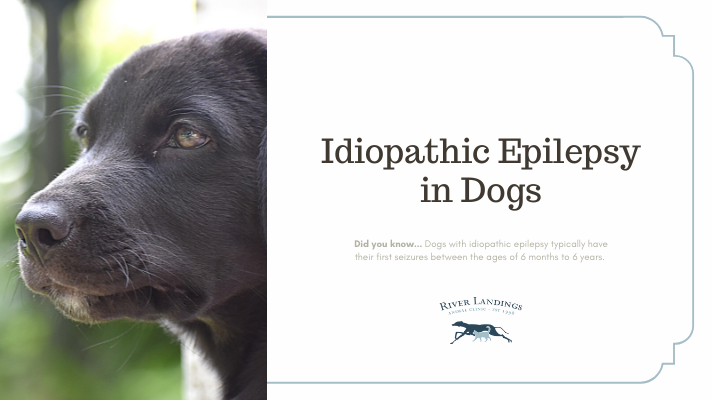
Idiopathic Epilepsy in Dogs

Epilepsy is a general term for neurological disorders that are characterized by recurrent seizures. In some cases, the seizures are caused by trauma, a toxin, a brain tumor, an infection, or an issue with your dog’s blood, kidneys, or other organs. At other times, the epilepsy is referred to as “idiopathic,” which simply means that there is no identifiable, underlying cause.

Seizures commonly fall into two categories: generalized (grand mal) or partial (focal). Generalized seizures commonly appear as involuntary jerking or twitching movements of all four limbs with loss of consciousness. Partial seizures may involve one limb, side of the body, or face. Partial seizures may progress to generalized seizures. Seizures may also result in abnormal behavior, vocalization, salivation, chomping/chewing, and involuntary urination and defecation.

Dogs with idiopathic epilepsy typically have their first seizures between the ages of 6 months to 6 years. Though idiopathic epilepsy can occur in any breed, it is considered an inheritable disease in many breeds and in some breeds a genetic basis has been identified. Therefore, dogs diagnosed with idiopathic epilepsy should not be used for breeding. Commonly affected breeds include:

  • Labrador retrievers

  • Golden retrievers

  • Poodles

  • Keeshonds

  • Beagles

  • German shepherds

  • Dachshunds

  • Irish setters

  • Cocker spaniels

Symptoms of Epilepsy in Dogs

Prolonged seizures lasting more than 5 minutes or two or more consecutive seizures without full recovery are referred to as status epilepticus. This is a true emergency and you should seek immediate veterinary care for you pet. Two or more seizures in 24 hours are referred to as cluster seizures and are an indication for beginning anti-seizure medication.

In dogs, seizures often occur in three distinct phases:

  1. The first is called the aural phase and the most common signs are behavioral changes. These changes may be subtle and include restlessness, attention seeking or anxious behavior.

  2. The second phase, called the ictal phase, is when the seizure itself takes place. A seizure can last from just a few seconds to several minutes.

  3. The final phase is called the postictal phase, which occurs after the seizure. During this phase, your dog may seem restless, incoordinated and/or disoriented. Occasionally, temporary blindness, deafness or other neurologic abnormalities may occur.

It may be difficult to watch your pet have a seizure but most are of short duration and cause no permanent harm. Avoid being bitten by keeping your hands away from your pet’s mouth during a seizure. If it can be done safely, provide padding and move your pet away from stairs to prevent injury.

Diagnosis of Epilepsy in Dogs

Your veterinarian will take a complete history and perform a thorough physical and neurological exam to determine if there is an identifiable, underlying cause of your dog’s seizure.

In order to do so, the following tests may be recommended:

  • Chemistry tests to evaluate kidney, liver, and pancreatic function, as well as sugar levels and electrolytes

  • A complete blood count to screen for infection, inflammation, anemia, and other blood-related conditions

  • Urinalysis

  • PCR testing and/or serology to evaluate for infectious diseases that may cause seizures

  • Referral to a neurologist for advanced testing including MRI and cerebrospinal fluid analysis

  • Cultures, PCR testing, and other specialized tests that can identify if specific parasites or diseases could be the cause

Treatment of Epilepsy in Dogs

Epilepsy cannot be cured, but it can usually be controlled with anticonvulsant drugs. If your veterinarian determines that your dog’s epilepsy is idiopathic, one or more of the following medications may be prescribed:

  • Phenobarbital helps reduce the frequency of your dog’s seizures and is the most prescribed medication for dogs with idiopathic epilepsy. It is generally a well-tolerated drug.

  • Potassium bromide is another seizure medication that may be added to your dog’s treatment, if she does not respond well to phenobarbital alone.

With these medications, as with all drugs, some patients experience side effects. In order to make sure an adequate dose is being given, and to monitor for side effects, it is important that blood levels of each medication as well as complete blood counts and blood chemistry profiles be monitored periodically. Liver function tests may also be indicated. Your veterinarian will advise what monitoring needs to be done and how often. Medication dosages should not be changed without talking to your veterinarian.

Dogs diagnosed with idiopathic epilepsy may require treatment for life, and sometimes more than one drug is needed for adequate seizure control. And while many dogs are well controlled, some are not despite multiple medications. In addition, adequate seizure control does not necessarily guarantee that a dog will be entirely seizure free. The degree of seizure control may need to be balanced against potential side effects of the medications.

Management of Epilepsy in Dogs

Besides medication, there are many ways for you, yourself, to help manage your pet’s epilepsy:

  • Maintain a seizure log that lists date, time, length and severity of seizures as well as videotape and share this with your veterinarian

  • Do not change or discontinue medications without consulting your veterinarian

  • Have blood work and other lab work done when recommended by your veterinarian

  • Consult your veterinarian whenever you notice a change in your pet’s condition

  • Put a medical alert tag on your pet’s collar so that if he becomes lost, whoever finds him will be aware of their seizure disorder and need for medication.

Several treatments are available for pets with epilepsy. By working closely with your veterinarian, you can maximize the chances of controlling the disorder and giving your pet a long, happy, and comfortable life.


Hear From Us Again

Don't forget to subscribe to our email newsletter for more recipes, articles, and clinic updates delivered straight to your e-mail inbox.

Related Categories:
dog health

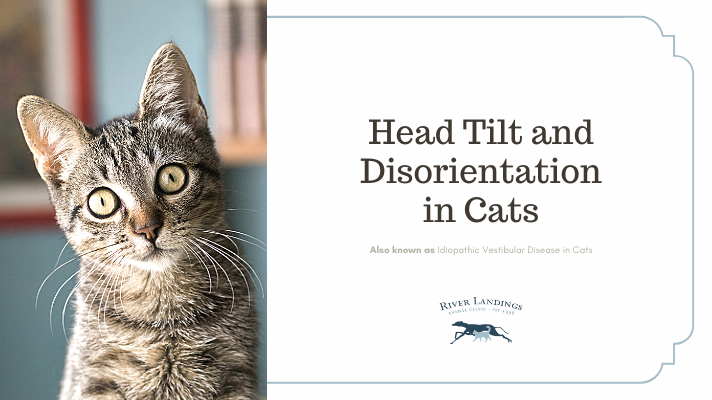
Head Tilt and Disorientation in Cats

Idiopathic Vestibular Disease in Cats

Head tilt is a medical condition that may be indicative of a serious underlying disorder, usually of the vestibular system. If a cat is tilting its head frequently to either side of the body (away from its orientation with the trunk and limbs), this is an indication that the cat feels imbalanced. The cat may even struggle to retain a balanced posture and fall.

A common cause of head tilting in cats are disorders of the vestibular system, a sensory system located in the inner ear which provides information needed to hold the body in an upright position and move about confidently. In essence, the vestibular system "tells the body where it is in relation to earth— whether it is upright, up-side-down, moving, being still, etc.

Symptoms and Types

  • Abnormal head posture

  • Head tilt to either side

  • Stumbling, lack of coordination (ataxia)

  • Constantly falling over

  • Eye movements erratic, apparent inability to focus

  • Circling (turning in circles)

  • Nausea, vomiting

Causes

Although the underlying cause for vestibular disease is unknown, the following factors may contribute to the condition:

  • Ear injury

  • Brain disease

  • Metabolic diseases

  • Neoplasia (abnormal tissue growth)

  • Nutritional deficiencies (e.g., thiamine deficiency)

  • Toxicity (e.g., use of toxic antibiotics in the ear)

  • Inflammation of the central and inner ear canal due to bacterial, parasitic, or other type of infection

Diagnosis

Your veterinarian will perform a complete standard physical exam, including a blood chemical profile, a complete blood count, a urinalysis and an electrolyte panel. You will also need to give a thorough background history of your cat's health leading up to the onset of symptoms. The results of the blood tests are usually normal, though changes may be present depending on whether there is an existing disease, such as an infection. Further tests will be required to diagnose underlying systemic diseases like thyroid problems, and infections.

Nutritional status will be evaluated, and you will need to recount your cat's normal diet, along with supplements or additional foods you may have fed to your cat. Thiamine deficiency, for example, can be the result of feeding your cat food that does not have B1, the source for thiamine, in its ingredients. Thiamine deficiency can also result from over consumption of raw meats and fish.

To determine if an ear infection is present, your veterinarian will thoroughly examine your cat's ear canal and will take a sample of the material present within the ear canal for further testing. Visual diagnostic tools, X-rays, computed tomography (CT), and magnetic resonance imaging (MRI) may be required to confirm a middle ear disease. Another important test used to diagnose this disease is a cerebrospinal fluid (CSF) analysis. (CSF is a clear, watery liquid that surrounds and protects the brain and spinal cord.) The results of a CSF analysis is useful in the diagnosis of inflammation and/or infection within brain. A bone biopsy may also be performed is an advanced test to confirm the involvement of the bone due to tumor or infection.

Treatment

In case of severe disease, your cat may need to be hospitalized for treatment and supportive care. Fluid replacement therapy is required in patients with fluid deficits due to frequent vomiting. These patients don’t require a special diet except in those cases where some nutritional deficiency is present. For example, thiamine supplements are often required in patients with head tilt due to thiamine deficiency.

In some cases, surgery is required to treat the underlying disease. If an ear infection is present, your veterinarian will prescribe broad-spectrum antibiotics that can enter and eradicate the infection in the brain and middle ear.

Living and Management

The prognosis is highly variable depending on the underlying disease. If the head tilt is due to involvement of the ear, chances for complete recovery are fairly high. In some cases, head tilt may persist. You will bring your cat to your veterinarian for regular follow-up examinations. Follow treatment guidelines strictly and give medications at proper doses and time. Incorrectly medicating your animal is one of the most preventable accidents with pets. In addition, do not use any drug of your own, or any drug that has not been approved by your veterinarian, especially in the ear, as it may complicate symptoms further.


Hear From Us Again

Don't forget to subscribe to our email newsletter for more recipes, articles, and clinic updates delivered straight to your e-mail inbox.

Related Categories:
cat health

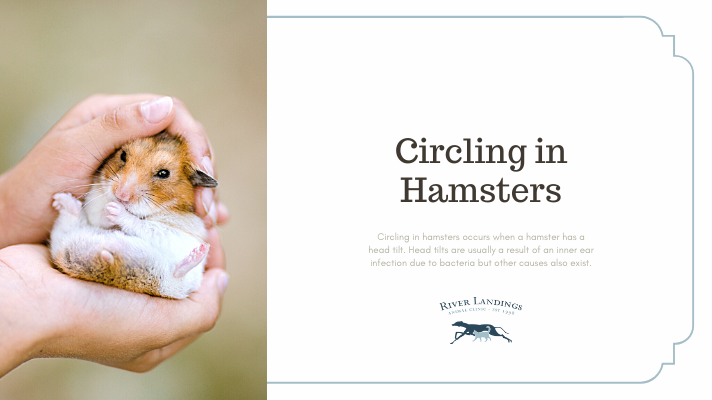
Circling in Hamsters

Hamsters are very active so it’s normal to see them running around their cages and on their exercise wheels. But if your hamster suddenly begins circling and tilting its head to one side while it is running around then this indicates something more concerning. Veterinary care may be necessary if your hamster is circling, so being able to recognize this issue is important for your hamster’s health.

Causes of Circling in Hamsters

Circling in hamsters occurs when a hamster has a head tilt. Head tilts are usually a result of an inner ear infection due to bacteria but other causes may be present.


With an inner ear infection, bacteria from a dirty environment or a respiratory infection enters the ear canal. The pressure that the infection causes inside the ear canal may result in a hamster feeling off-balance and in pain. This results in circling when it walks and some hamsters may even fall over.

Neurological problems due to trauma or a brain disease like epilepsy can also cause circling in hamsters. These issues are not as common as a bacterial infection in the ear but are still possible reasons for this type of behavior.

Diagnosing the Cause for Circling in Hamsters

While circling in hamsters may be an obvious behavior to observe, in order to know for sure what is causing this some tests may need to be run.

Since an ear infection is the most likely reason for the circling, debris from inside your hamster's ear may be looked at under a microscope. This will check to see if bacteria from an infection is present and, if it is, an ear infection will be diagnosed.

Neurological problems are harder to diagnose. If your hamster was recently injured before the circling began then this may mean it suffered head trauma at some point. Being dropped, grabbed by a dog, or crushed in a door or piece of furniture are all types of injuries that may cause head trauma.

Seizures are a symptom that will coincide with epilepsy, another neurological issue. There is no test for epilepsy. In these instances, continued close observation may be required and videoing any unusual behavior could be helpful for your vet.

Treatment of Circling in Hamsters

Persistent or severe circling in hamsters always merits a visit to your veterinarian.

If the behavior is caused by an ear infection, antibiotics that are safe for a hamster to take will need to be prescribed as treatment. Without them, permanent damage can occur to your hamster's ear and the circling may never stop. Infections can also lead to more serious complications that, in extreme cases, can be life-threatening. Oral antibiotics and sometimes pain medications may be needed to treat the infection. If ear debris is visible a gentle cleaning may also be helpful.

If the circling is not due to an ear infection then it may be more difficult to treat. Brain damage from seizures or head injury can be permanent. Some circling will resolve over time on its own but some hamsters may have permanent circling. If the circling is so bad that it affects your hamster's quality of life and it is unable to eat then euthanasia may be discussed.

How to Prevent Circling in Hamsters

Hamsters are small pets that like to hide. It can be difficult to notice when they are acting a little strange in their cages, but regular observation of your hamster's normal activities can help detect the beginning of a problem. This, along with regular cleaning of the cage and washing of the cage accessories, can help prevent ear infections that cause circling.

In order to prevent head trauma that can result in circling, be sure to only allow children to handle your hamster when they are sitting on the ground. This will decrease the likelihood of your hamster falling and getting hurt. When the child is done holding your hamster, either bring the cage to the floor to put them back in it or gently take your hamster from the child so that you can carefully put it back in its cage yourself.

Keep your hamster safe if you have dogs or cats in the house when they are out of their cage and make sure that their cage is secure and locked over at all times.


Accidents can happen but they are far less likely to occur if you supervise carefully and take extra precautions.


Hear From Us Again

Don't forget to subscribe to our email newsletter for more recipes, articles, and clinic updates delivered straight to your e-mail inbox.

Related Categories:

small animal care

4 Rainy Season Dangers You Might Not Know Of

Each year, certain parts of North America are bombarded with rain. While this may be good for the garden, high rainfall can potentially pose some real threats to your dog.

1. Mushrooms

During the rainy season, mushrooms may pop up in your yard with more frequency. There are thousands of species of mushrooms, but thankfully only about 100 are poisonous. That said, mushroom identification is very difficult, so it's hard to tell which are poisonous versus which are benign. As a result, whenever you see mushrooms growing in your yard, make sure to remove them immediately and throw them away to prevent accidental ingestion by your dog. If your dog does get into a mushroom, contact your veterinarian immediately about inducing vomiting to get any potential toxin out.

Certain types of mushrooms may cause organ injury including:

  • Gastrointestinal injury (signs include drooling, not eating, vomiting, diarrhea)

  • Liver linjury (signs include vomiting, black tarry stool, yellow skin)

  • Kidney injury (signs include abnormal urination and thirst)

  • Cardiovascular injury (signs include a very slow or rapid heart rate)

  • Neurologic injury (signs include hallucinations, tremors, seizures)

When in doubt, get to your veterinarian immediately as it's easier - and less expensive - to treat early on versus once clinical signs have developed.

2. Leptospirosis

Leptospirosis, a bacteria-like spirochete, is carried naturally by wildlife, like rodents and raccoons. In high rainfall situations, it’s prevalent in the environment. In dogs that have exposure to water sources, contaminated by wildlife urine (puddles, streams, ponds, etc.), transmission can occur. Canine leptospirosis can result in liver injury and acute kidney injury.

Signs of leptospirosis include:

  • Vomiting

  • Not eating

  • Malaise

  • Yellow skin

  • Excessive thirst

  • Urination

As leptospirosis can accidentally be transmitted to humans, it's important to talk to your veterinarian about prevention, including vaccines.

3. Mosquitoes

While mosquitoes may seem like just a pesky insect to you, they can be life-threatening to your dog. That's because mosquitoes can carry Dirofilaria, which transmits heartworm infection to your dog. Thankfully, there is a very effective preventative in either a topical or oral form. When in doubt, use year-round control to prevent problems from mosquitoes. If your dog has thin fur or skin and is more predisposed to getting bitten, use Skin So Soft or a topical insect repellent that repels mosquitoes. Talk to your veterinarian to be safe before applying anything.

Click here to learn more about heartworm disease in dogs.

4. Toads and frogs

Depending on where you live in the United States, certain types of toads - specifically the Bufo marinus or Bufo alvarius - can be poisonous to dogs. In fact, a dog drinking water from an outside dog bowl, that had a poisonous toad sitting in it, can result in clinical signs of:

  • drooling

  • panting

  • walking drunk

  • a racing heart rate

  • a very slow heart rate

  • even seizures

Frogs are not toxic, but can cause gastrointestinal upset when ingested.

To be safe, supervise your dog outside to prevent accidental ingestion of dangers like toads and frogs. When in doubt, contact your veterinarian or ASPCA Animal Poison Control Center at 888-426-4435 if you think your dog is ill or could have ingested something poisonous.

If you have any questions or concerns, you should always visit or call your veterinarian -- they are your best resource to ensure the health and well-being of your pets.


Hear From Us Again

Don't forget to subscribe to our email newsletter for more recipes, articles, and clinic updates delivered straight to your e-mail inbox.

Related Categories:

dog health

Fungal Disease in Amphibians (Chytridiomycosis)

Chytridiomycosis

Chytridiomycosis is a serious infectious disease caused by Batrachochytrium dendrobatidis, a zoosporic fungus related to water molds. The fungus feeds on keratin, a protein found in the outermost layers of the skin, and survives in most environments, even without a host. It is believed that the decrease in the population of frogs in many areas is due to chytridiomycosis.

A common way to recognize chytridiomycosis is to check your amphibian's skin for sloughing or shedding. The disease can be fatal for amphibians left untreated. Therefore, owners suspecting chytridiomycosis in their amphibian must seek immediate veterinary care.

Symptoms and Types

An amphibian suffering from chytridiomycosis may shed excessively, develop thickened or pale skin and, in the cases of tadpoles, disfigured beaks. Other common symptoms or signs include:

  • Lethargy

  • Loss of appetite (anorexia)

  • Constriction of the eye's pupil

  • Abnormal posture of the hind legs

  • Abnormal behavior and disposition

  • Hyperemia (an increase in blood flow to different body tissues)

Some amphibians present no clinical symptoms of the disease, but are still infected with the Batrachochytrium dendrobatidis fungus. These animals are carriers of the disease.

Causes

Chytridiomycosis is due to an infection with the B. dendrobatidis fungus. Generally, amphibians contract the fungus through their skin while in contaminated water.

Diagnosis

Veterinarians diagnose the disease by examining skin scrapings or toe clips that are stained and put under a light microscope. Placing an infected animal in a shallow dish of water will often confirm the sloughing of skin, a common symptom for chytridiomycosis.

Treatment

To treat chytridiomycosis, your veterinarian will prescribe antifungal medication, such as itraconazol, which is usually diluted and administered as a bath. Supplemental treatment may include ultraviolet light therapy.

Living and Management

For unknown reasons, chytrid infections have a high mortality rate. Therefore, it is important you follow your veterinarian's instructions and provide a clean aquatic environment and an appropriate temperature range for your amphibian.


Hear From Us Again

Form Block
This form needs a storage option. Double-click here to edit this form, and tell us where to save form submissions in the Storage tab. Learn more

Don't forget to subscribe to our email newsletter for more recipes, articles, and clinic updates delivered straight to your e-mail inbox.

Related Categories:

small / exotic pet care