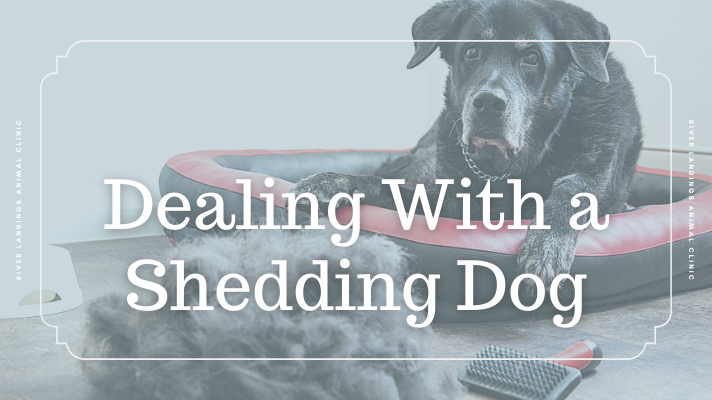
Dealing With a Shedding Dog & Shedding Season

Dog shedding can be frustrating for all of us, no matter how much we love our dogs. The mess of dog hair can be enough to drive dog owners crazy. All dogs shed to some degree, with the exception of completely hairless dogs. Certain breeds (“hypoallergenic dogs”) shed very little, while others (namely heavily double-coated breeds like the lovable German Shepherd) shed large amounts.

Year-Round Shedding

All animals with hair shed on a regular basis. This is part of the natural life cycle of hair shafts within the follicles. All hair shafts go through phases of growth and shedding. The phases affect the rate of hair growth and will vary by breed, age, hormones, environment, and overall health of the dog. These factors also contribute to the length and texture of the hair, though genetics is the predominant factor.

Dogs with continuously growing hair, like poodles and Yorkshire terriers, have hair shafts with longer life spans and shed very little. On the other hand, dogs like labradors and huskies have a shorter hair shaft lifespan and more abundant undercoats, resulting in greater shedding.

Shedding Season

In general, most dogs will shed extra during spring and fall. Most dogs are double-coated; they have undercoats and top coats. The top coat is what you see and feel on the outside. The undercoat is made up of secondary hairs that grow around the primary hairs and tend to be shorter and softer. Seasonal shedding occurs as a result of temperature change. This process is sometimes called "blowing coat." When the weather warms, dogs shed their old winter undercoats to make way for a lighter summer coat. Then, when it begins to get cool again, dogs shed their lighter undercoats and grow thicker, warmer coats for winter.

Not all coat types are affected the same way by temperature changes. For example, dogs like Bichon Frise and Shih Tzus have less undercoat, so they shed less when seasons change. The old coat must still be removed by grooming the dogs. However, dogs like Newfoundlands and Malamutes have heavy, thick undercoats that make shedding much more obvious. Basic brushing is important for both coat types.

Other Reasons for Shedding

Your dog's health can affect the shedding rate, so it is important to take note of unexplained excessive shedding. Skin problems, endocrine diseases, nutritional or vitamin deficiencies, and other metabolic disorders can cause hair loss or change the rate of hair growth. It is important to contact your veterinarian if the rate of shedding seems unusual for your dog. Keep your dog healthy with routine vet visits and proper nutrition. Contact your pet’s vet immediately if you notice any signs of illness.

Get Control Over Shedding

There's no way to completely stop shedding. It's a healthy and natural process that is necessary for dogs. Shaving your dog down is not a good idea, as it can interfere with your dog's natural self-cooling and self-warming mechanism. In the long run, it will not make shedding occur any less. In rare cases, the hair in shaved areas will grow back abnormally or not at all. The key to preventing excessive shedding is to keep up with it through brushing.

Routine grooming is absolutely essential for all dogs. Brushing or combing your dog helps to remove dead hairs before they can fall on your carpet, bedding, and upholstery. It will also prevent those dead hairs from forming mats on your dog's coat that can eventually harm the skin. Brushing also distributes the natural, healthy oils produced by the skin throughout the hair coat. Using the right grooming tools can make a great difference. For heavy shedders, a special shedding tool like the FURminator can work wonders but be mindful of not pushing down too hard when using it. For some coat types, the dead hairs don't shed as much, but they cause the dog's coat to appear ragged and can eventually become matted. Some owners prefer to take these dogs to a professional groomer periodically for coat care. For some coat types, hand-stripping is a technique that is often preferred over trimming the dog's hair.

Managing the Aftermath of Shedding in Your Home

Shedding makes a mess, no doubt about it. As a dog owner, you have probably come to terms with the fact that regular house cleaning is the norm, especially during shedding season. The key is to remove hair before it has a chance to embed itself into your carpet and upholstery. Keeping a pet hair tape roller around for touch-ups throughout the day is an excellent idea. For deeper cleaning of upholstery and small areas, consider using a handheld vacuum designed to pick up pet hair.


Hear From Us Again

Don't forget to subscribe to our email newsletter for more recipes, articles, and clinic updates delivered straight to your e-mail inbox.

Related Categories:
dog health

Reverse Sneezing in Cats

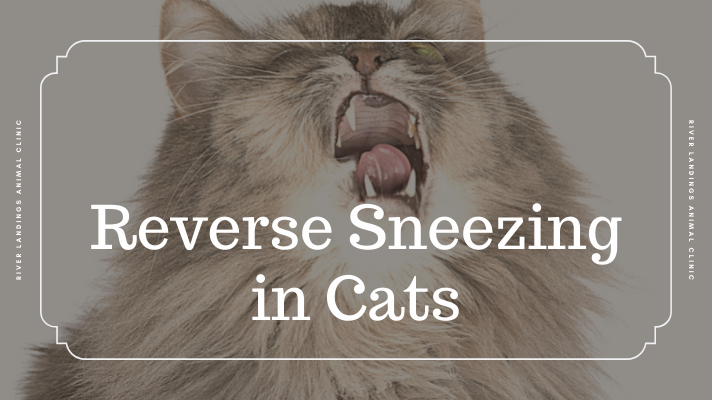
Reverse sneezing is a way for cats to clear irritants from the back part of their throat or nasopharynx. This type of sneezing is not done by humans, so witnessing it can be scary for pet parents. The back of the throat is where the nasal cavity opens into the oral cavity. When there are irritants or foreign materials in that area, animals will use reverse sneezing to try and get rid of the material.

What does reverse sneezing in cats look like?

When reverse sneezing, cats will often close their eyes, extend their necks, and make a snorting noise. If your pet is exhibiting these signs, it is vital that you ensure they are not coughing, choking, or having trouble breathing. These can all look similar and it may be difficult to distinguish the difference. Reverse sneezing is not a medical emergency as long as it resolves after a few seconds and the animal acts normal otherwise.

Why does a cat reverse sneeze?

This phenomenon is triggered by irritants to the naso- and oropharynx. These can be inhaled allergens (like pollen) or foreign material (like grass or weeds) that is inhaled or ingested. Occasionally, reverse sneezing can accompany excitement. The first line of treatment for recurrence is an antihistamine in case allergies are the irritating culprit. If the condition persists, a sedated oral exam will need to be conducted to look for foreign material. Finally, if clinical signs are persistent, general anesthesia with an endoscopic exam of the caudal nasal cavity and possible CT scan will be recommended.

The good news about reverse sneezing is that it is commonly self limited in animals. If it is persistent or affecting your cat’s quality of life, then further diagnostics and treatment measures should be explored.


Hear From Us Again

Don't forget to subscribe to our email newsletter for more recipes, articles, and clinic updates delivered straight to your e-mail inbox.

Related Categories:
cat health

Flatulence in Dogs

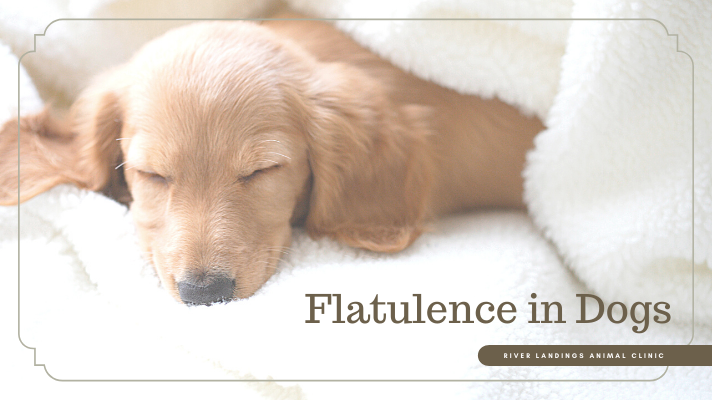
Flatulence occurs when gas builds up in your dog’s intestinal tract and colon. This is commonly caused by the dog eating something new – either a change in diet, or a food that they weren’t meant to eat. If your dog is eating food they can’t digest like dairy, soybeans, peas, or foods high in fat, they can experience chronic flatulence. Dog farts are typically not concerning, but if your dog’s gas becomes unbearable it may be time to make a change.

What Are Some Causes of Flatulence in Dogs?

Hard-to-digest foods like table scraps or spicy foods can give your dog an upset stomach, which can result in excessive gas or excessively smelly gas. Feeding them food or snacks with low-quality ingredients, fillers, or artificial preservatives can also give your dog gas.

If your dog is fed a high-quality diet and still has excessive gas, your veterinarian can test to see if they have poor digestion. They can also try to identify an intolerance or allergy your dog may have by eliminating ingredients from their diet and reintroducing them again.

Dogs who eat quickly will swallow more air while eating, which also leads to more flatulence.

Which Dogs Are Most at Risk?

If your dog is overweight, obese, or sedentary they are at a higher risk for chronic flatulence, regardless of diet. Short-nosed breeds like Pugs, Boston Terriers, Shih Tzus, and Lhasa Apsos tend to swallow a lot of air when they eat or drink, which causes excessive farting.

Could Flatulence Be a Symptom of Another Health Issue?

Once you’ve ruled out a food intolerance or digestive issue as the cause of your dog’s flatulence, you may need to visit your vet to identify a more serious cause. Persistent dog farts may be a side effect of the following health issues:

  • Inflammation of the large intestine or colon (canine colitis)

  • Irritable bowel syndrome (IBS)

  • Stomach infection

  • Intestinal parasites such as worms

  • Inflammatory bowel disease

  • Inflammation of the pancreas

  • Cancer

What Can I Do to Reduce My Dog’s Flatulence?

A healthy and consistent diet is the best way to reduce your dog’s farts.

You can also try the following:

  • Don’t give your dog table scraps. Dogs can’t easily digest scraps, including foods high in fats and sugars, which can cause bloating and discomfort.

  • Don’t give your dog dairy products. Most dogs are lactose intolerant, which means that milk, cream, or cheese can upset their stomachs.

  • Keep your dog out of the trash in your home and outside. Practice the command “leave it” when taking your curious dog on walks.

  • Avoid giving your dog fart-inducing foods. Steamed vegetables like broccoli, cauliflower, and Brussels sprouts can be healthy for your dog, but also produce more gas.

  • Slow down your speed-eater. Divide your dog’s food into smaller portions throughout the day or try a slow-feeding dish to make them slow down.

  • Keep your dog active. Make sure they get plenty of exercise and playtime.

  • Change your dog’s diet. If you switch your dog to a new food, gradually introduce the food with their current kibble over the course of a week or two.

If those tips don’t work, you may want to feed your dog a mix of dry and wet foods. Make sure they are getting the right amount of protein. You generally want to give your dog more protein than carbohydrates, but too much red meat can also be the cause of especially stinky farts. Introducing a probiotic diet or supplement will aid in healthy digestion. Ask your veterinarian first if you’re considering giving your dog over-the-counter anti-gas medication.

What Are Some General Tips for Choosing a Healthy Dog Food?

Foods with low-quality ingredients can cause gas in dogs, so make sure to look at the ingredients that are used in your dog’s food. Avoid feeding your dog food that contains fermentable fibers such as chicory, inulin, pectins, psyllium, plant gums, oats, barley, beet pulp, fruit, or legumes. High-quality foods will consist of the following:

  • One or more animal-based protein sources at the top of the ingredient list

  • The words “highly digestible” or “low residue” on the label

  • Minimal to no chemical preservatives

When Is It Time to See the Vet?

If your dog still has excessive gas after you’ve changed their diet, it may be time to visit your vet. Not only is your dog’s gas uncomfortable for you, but flatulence can also cause your dog physical discomfort. If your dog has a medical problem or food sensitivity, their gas may be accompanied by the following symptoms:

  • Weight loss

  • Change in appetite

  • Vomiting

  • Diarrhea

Schedule a visit to your veterinarian if your dog shows any of those symptoms.


Hear From Us Again

Don't forget to subscribe to our email newsletter for more recipes, articles, and clinic updates delivered straight to your e-mail inbox.

Related Categories:
dog health

Get to Know Your Dog’s Digestive System

A healthy digestive system is essential to your dog’s well-being. The digestive system serves many important functions: it takes in food, absorbs nutrients, maintains fluid and electrolyte balance, and gets rid of waste.

It also covers a lot of area. The digestive tract includes the oral cavity (salivary glands, tongue, teeth), esophagus, stomach, small and large intestine, liver, pancreas, rectum, and anus.

The canine digestive system isn’t the most glamorous topic, but understanding how it works puts you in a better position to determine if your dog is sick and needs to be seen by a vet. It can also guide you in making decisions that will enhance their health.

Here are 7 interesting facts about your dog's gastrointestinal tract and health!

1. Dogs Get Heartburn, Too

Dogs can get indigestion and heartburn just like humans.

In the fasted state, stomach acids are very similar in people and dogs. After eating, however, dogs produce more acid than we do.

Our similarities mean that dogs and people benefit from the same antacids. But before giving your dog an over-the-counter antacid, talk to your veterinarian. You will want to be sure you aren’t risking any potential drug interactions or side effects.

Veterinarians can also provide you with important usage guidance for antacids to ensure you are not putting your pet’s health at risk.

But more stomach acid doesn’t translate to letting your dog eat potentially contaminated foods. Dogs are no less sensitive to food poisoning (bacterial contamination) than are people. The practice of feeding raw meat to dogs carries a demonstrated risk of food poisoning.

2. Food Moves Through a Dog's GI Tract Three Times as Fast

Dogs have a small intestine that occupies about 25% of the total gastrointestinal volume, which is consistent with other omnivores, including people. The small intestine of a cat, a true carnivore, occupies only 15%.

On average, food moves through the canine stomach a bit slower than ours, but food movement through the intestines is a little faster. Gastrointestinal transit time is six to eight hours for dogs, while in people it’s between 20 and 30 hours.

3. Dogs Can’t Chew Side to Side

You’ve probably noticed that your dog can’t chew side to side. The dog’s jaw only allows for up and down motion when chewing, whereas people have side-to-side movement that allows more grinding of food.

The difference probably has to do with our historical diets. The wolf-like ancestors of dogs ate mostly meat that could be easily ripped and swallowed, but people also relied on gathering or farming plant material that required more chewing.

4. Most Dogs Can Digest and Absorb Carbs

But modern dogs are considered omnivores, just like we are. They originally ate a carnivorous diet in the wild, but since they have been domesticated, adaptions have been made that allow them to digest and utilize plant-based nutrients.

True carnivores, like cats, have a higher nutritional requirement for taurine, arachidonic acid and certain vitamins, which are available in animal fat and protein sources.

Omnivores don’t have a higher requirement for these and create their own arachidonic acid from vegetable oils. Most normal dogs have no difficulty digesting and absorbing carbohydrates. So, there is no benefit to feeding grain-free diets to normal dogs.

5. Cholesterol Doesn’t Impact a Dog’s Health

Your doctor may advise you to lower your cholesterol level, but you won’t hear the same concerns echoed at the vet’s office. Cholesterol does not have the same effect on your dog’s heart, and their digestive systems are designed to accommodate animal fat.

Dogs also don’t have the same issues with colon cancer, so the idea that eating foods high in soluble fiber or low in saturated or trans-fats will provide any health benefit is really unknown at this point.

Vets say one of the keys to health is keeping your dog at a healthy weight. Obesity is related to exacerbation of many health problems in dogs and is a vet’s number one battle. If it’s any one thing that we can do, it’s talk to our vets about how to curb obesity.

6. Diarrhea and Vomiting May Be Bigger Problems Than You Thought

Gastrointestinal diseases account for about 10% of veterinary visits. Diarrhea is one of the most frequent clinical signs. Abnormal stool may also be a first symptom of a more systemic disease process, such as kidney, liver, and some endocrine disorders.

Vomiting is also a common symptom. An acute bout may resolve itself over a day or two—vets will often recommend a short, 12-hour period of fasting to “rest” the GI tract, followed by a bland diet of chicken and rice. But when the clinical signs continue or are especially severe, testing is often recommended to attempt to find out what may be causing the distress.

Imbalances with other organs, such as the kidneys, can also cause gastrointestinal signs. It is important to see your vet to determine the best treatment for your dog.

7. Your Dog’s Poop Tells a Lot About Their Health

You can learn a lot about your dog’s health by studying her poop (an unpleasant, but necessary task).

There are a variety of causes for abnormal stool. Most episodes of acute onset diarrhea are typically self-limiting within a few days, as dietary indiscretions are a frequent cause.

Parasites, bacteria, and viruses may also cause diarrhea. Depending on the underlying cause, the animal may or may not need appropriate treatment for the infectious agent. If diarrhea persists for several days, and/or there is blood in the stool, the animal should be examined by a veterinarian who can determine the most appropriate course of treatment.

On the other hand, if your dog isn’t pooping and is straining to defecate, they may be constipated, which if prolonged, may cause serious health issues.

One important takeaway is to contact your vet if you notice anything suspicious. Even short episodes of diarrhea or constipation that occur periodically, especially in combination with other signs, like weight loss and loss of appetite, may indicate a more complicated disease process.

Another key point is that you regularly monitor your dog’s poop habits. It is important for the owner to daily monitor how often the animal defecates and the consistency of the stool. There is some variation between animals and also variation from day-to-day, with some animals having consistently softer stools or harder stools than others. But generally, with time, the owners should be able to establish what’s normal for their animal.


Hear From Us Again

Don't forget to subscribe to our email newsletter for more recipes, articles, and clinic updates delivered straight to your e-mail inbox.

Related Categories:

dog health

Let's talk about cat poop!

Healthy Poop in Cats

How often should a cat 'go'?

The general rule of thumb is that a cat should poop at least once a day. However, the frequency of your cat's bowel movements is affected by multiple factors including the age (i.e. kittens defecate more often than adults), diet, exercise, and health status (i.e. IBD, hyperthyroidism, parasites, CKD).

Because of this, the exact frequency of the bowel movement will be individual, and you should monitor for its fluctuations instead. If your cat's bowel movements start to differ from the normal frequency for longer than a day or two, it is advisable to pay a visit to the vet and resolve the cause of the change.

What does healthy poop look like?

Healthy cat poop should be deep brown in color (but not too dark nor black) and malleable in consistency (similar to modeling clay; it should be firm enough to leave little to no residue on the ground when picked up, yet pliable and not too hard). Poop should be passed in one piece or a few smaller pieces of somewhat cylindrical shape and segmented appearance. The odor shouldn't be too foul, although this can be variable.

Unhealthy Poop in Cats

The key signs to look out for in your cat's poop are the consistency, shape and color. The stool's consistency is directly influenced by the amount of moisture in it, which gives you an insight into the colonic health. The colon (or the large intestine) reabsorbs the remaining water and other key nutrients from the indigestible material, thus solidifying this material into the firm stool. The consistency of the stool can be descriptively scored to help you recognize if your cat's stool is healthy.

A comprehensive fecal scoring guide was described by Purina. According to Purina's guide, the consistency of the healthy stool can be scored on the scale from 1 to 7. The healthy stool (as described above) is scored with 2, while the stool that is too hard and dry is scored with 1. Scores from 3 to 7 are reserved for moist, mushy or liquid stools.

Hard stool (score 1) is typically a sign of constipation, which can be associated with dehydration, colon obstruction or certain metabolic and neurological conditions. Thus, if you notice that your cat is passing poop that is too hard in consistency, you should pay a visit to the vet and address the issue. The hard poop is passed in smaller, more spherical pellets which leave no residue on the ground, and the passing itself requires more effort.

Soft, mushy or liquid stools (scores 3-7) can be a sign of bacterial infections, intestinal parasites, or food intolerance. If your cat's poop is moist on the surface, thus leaving residue on the ground, but retains the shape and form when picked up, then its consistency can be scored with 3. This poop has little to no visible segmentation, but is not considered to be an alarming sign.

If the poop is so moist that it feels saggy and it loses form when picked up (but does retain a logged shape when passed), then the consistency can be scored with 4. Furthermore, if the stool is passed in a pile rather than the logs, then it is scored with 5. If your cat passes liquid stool with texture but no shape, then the consistency is scored with 6. Liquid stool without any texture nor shape is scored with 7.

Soft or fluid stool (as described by the scores 4-7), accompanied by a more frequent bowel movement, are referred to as diarrhea. While the causes for diarrhea are variable and often multi-factorial, this state is considered to be an important, sign of underlying problems and is a legitimate reason to consult with your vet. Sometimes, diarrhea can be caused by stress (i.e. moving to a new environment or bringing in a new pet), or food allergies and intolerance.

Other times, however, diarrhea can be a symptom of a disease, a bacterial infection, or even intestinal parasites. If your cat is suffering from diarrhea, make sure to closely monitor the frequency on your cat's bowel movement, so you can report it to your veterinarian. Keep an eye on other signs of disease and injury and the changes in your cat's behavior. This will be key for the diagnosis of the underlying cause.

Contact your veterinarian ASAP after spotting the symptoms, especially if diarrhea persists for more than two days and is accompanied by lack of appetite, lethargy, or vomiting. The veterinarian will diagnose the underlying cause and help you design a special recovery diet for your cat until it recovers.

The stool is a direct insight into its colonic health. It can help you recognize if your cat is eating the right diet and drinking enough water or if it's suffering from certain health problems. So, the next time you clean the litter box, make sure to quickly inspect if your cat's poop is healthy! A healthy cat is a happy cat.


Hear From Us Again

Don't forget to subscribe to our email newsletter for more recipes, articles, and clinic updates delivered straight to your e-mail inbox.

Related Categories:

cat health