
Socialization of Cats and Dogs

0504 _ socializing _BlogTh.png

What is socialization?

Socialization is the process of preparing a dog or cat to enjoy interactions and be comfortable with other animals, people, places, and activities. Ideally, socialization should begin during the "sensitive period" which is between 3 and 14 weeks of age for puppies, and 3 and 9 weeks of age for kittens.

Advice to new puppy and kitten owners

Adopting a new kitten or puppy is a wonderful and exciting experience. It is also a time where a little extra planning can help a new pet develop a calm and confident temperament that will help them enjoy life to the fullest. The basic tenets of socialization are outlined below.

  • When adopting a puppy or kitten, ask for a pre- and post-adoption socialization plan.

  • Create a socialization plan specifically for your dog or cat to prepare him or her for life in your household. Plan exposures to the animals, individuals, environments, activities, and objects that will be part of his or her new life.

  • Provide regular positive and diverse experiences to encourage your dog or cat to enjoy new experiences without becoming fearful or aggressive.

  • Provide praise, play, and treats to reward engagement. Allow the dog or cat to withdraw if he or she is uncomfortable. Move at a pace appropriate for your pet's personality.

  • Well-managed puppy or kitten socialization classes are a good way to socialize your new pet within the “sensitive period” of a pet’s life.

  • Puppies or kittens that are not fully vaccinated should not be exposed to unvaccinated animals or places they may have been (such as outdoor parks).

  • Continue to reward your dog or cat for calm or playful responses to social interactions throughout his or her life.

  • For dogs or cats with special behavioral needs, develop a plan with your veterinarian and/or another animal behavior expert.


Hear From Us Again

Don't forget to subscribe to our email newsletter for more recipes, articles, and clinic updates delivered to your inbox (here). Or, you can keep up to date by liking and following our Facebook page (here).

Related: We have more information under our cat health + dog health + client care categories.
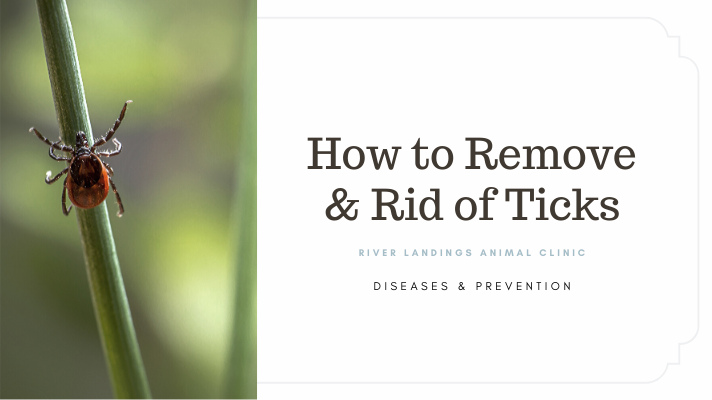
How to Remove Ticks on Dogs and Cats

0416 _ ticks _BlogTh.png

Ticks can transmit deadly diseases to a pet within as little as 24 hours of latching on, so swift removal is important for minimizing their exposure to disease.

While removing a tick may seem like a self-explanatory process, you’ve probably heard some myths about tick removal that can actually do more harm to your pet. Here’s the best way to remove a tick from a dog or cat safely.

What You’ll Need to Remove Ticks on Pets

Before you start the actual removal process, these are the supplies you should have on hand:

  • Tweezers (pointy ones work best)

  • Latex or rubber gloves

  • Rubbing alcohol

  • Antiseptic wipes (optional)

  • Jar or container with lid

  • Treats (for distraction)

How to Get a Tick Off Your Pet

Follow these steps to safely remove a tick from your dog or cat:

STEP 1: PUT ON YOUR GLOVES.

Ticks carry infectious agents that can affect both humans and dogs, so it’s always better to play it safe and wear protective gear.

STEP 2: STEADY YOUR PET AND KEEP THEM CALM.

When you’re getting ready to remove the tick, you’ve got to keep your pet calm. Any unusual poking or prodding tends to make dogs and cats nervous. If there is another person available, have that person help keep your dog relaxed during removal.

You may find it helpful to distract your pet with lickable dog treats. You may also use treats as rewards for cooperative behavior during the tick-removal process.

Never try to force your dog or cat to stay put. If your dog resists during the tick-removal process or becomes scared or aggressive, you should enlist the help of your veterinarian.

STEP 3: POSITION YOUR TWEEZERS.

Take a pair of tweezers—fine-tipped, pointy ones work best—and grasp onto the tick as close to your dog’s skin as possible. Grabbing close to the skin is the best way to get a tick head out.

Be careful not to pinch your dog’s skin.

STEP 4: PULL OUT THE TICK.

Using steady, even pressure, pull the tick straight out. This is the best way to remove a tick from a dog.

Do not twist or jerk the tick because you want to avoid leaving any part of the tick’s mouth or head behind. Also, make sure not to squeeze or crush the tick, since its fluids may contain infectious material.

Although you may have heard that you can remove a tick with a lit match, this is a dangerous myth! Doing so can cause a tick to release toxins or diseases into your pet.

After removing the tick, examine it to make sure the head and mouthparts were removed. If not, take your pet to a veterinarian to remove any remaining tick parts.

STEP 5: KILL THE TICK.

Kill the tick by placing it in a container with rubbing alcohol.

Once the tick is dead, most veterinarians recommend keeping it in the container with a lid in case your pet begins displaying symptoms of disease.

There are many types of ticks, and each tick carries different kinds of diseases, so keeping the tick can help your veterinarian make a proper diagnosis.

STEP 6: DISINFECT THE BITE SITE.

You can use triple-antibiotic spray or wipes to disinfect the bite site, or you can use over-the-counter chlorhexidine solution to clean the area.

Keep an eye on it for signs of infection. If the skin remains red or becomes inflamed, see your veterinarian right away.

STEP 7: PROTECT YOUR DOG.

Start your pet on effective flea and tick prevention to keep them safe. If you already have your pet on flea protection, read the label to make sure it also protects against ticks. If it doesn’t seem to be working, ask your vet for recommendations for an effective flea and tick treatment.

Make sure to keep a close eye on your dog or cat over the next few weeks. You should be on the lookout for any strange symptoms, including a reluctance to move (joint pain), fever, fatigue, loss of appetite, swollen lymph nodes or swelling at the tick bite site.

If your dog displays any of these symptoms, take your pet to your veterinarian immediately.


Hear From Us Again

Don't forget to subscribe to our email newsletter for more recipes, articles, and clinic updates delivered to your inbox (here). Or, you can keep up to date by liking and following our Facebook page (here).

Related: We have more information under our cat health + dog health + client care categories.

Coronavirus (COVID-19) and Pets: An FAQ for Pet-Owners

0316 _ coronavirus _BlogTh.png

This article was written on March 12th, 2020. Last updated on March 16th.

Can dogs get the new coronavirus (COVID-19)?

At this time, experts believe it is very unlikely. The World Health Organization currently advises that there is no evidence to suggest that dogs or cats can be infected with the new coronavirus. The OIE states there is no evidence that dogs play a role in the spread of this disease or that they become sick. The CDC also seconds that opinion, stating that, “At this time, there is no evidence that companion animals including pets can spread COVID-19.”


Although pets cannot become sick from COVID-19, could they serve as a conduit of infection between people?

Yes. It is possible that a person with COVID-19 could sneeze or otherwise contaminate their pet, and then another individual could touch that animal and contract the disease. Veterinary experts believe the risk for transmission would be low. However, animals living with sick individuals should be kept away from other people and animals (quarantined at home), just as people who live with sick individuals must avoid contact with others. The CDC recommends that you restrict contact with pets if you are sick with COVID-19, just as you would restrict your contact with other people. Avoid snuggling, being kissed or licked, and sharing food. If you must interact with your pet, wash your hands before and after, and wear a face mask.


If I am ill with COVID-19 are there special precautions I should take to prevent spreading disease, including when caring for my pet?

If you are showing symptoms or declared positive with COVID-19, you need to be careful to avoid transmitting it to other people. Applying some commonsense measures can help prevent that from happening.

  • Stay at home except to get medical care and call ahead before visiting your doctor.

  • Minimize your contact with other people, including separating yourself from other members of your household who are not ill; using a different bathroom, if available; and wearing a facemask when you are around other people or pets and before you enter a healthcare provider’s office.

  • Wash your hands often, especially before touching your face, and use hand sanitizer.

  • Use a tissue if you need to cough or sneeze and dispose of that tissue in the trash.

  • When coughing or sneezing, do so into your elbow or sleeve rather than directly at another person.


Out of an abundance of caution, the AVMA recommends you take the same common-sense approach when interacting with your pets or other animals in your home, including service animals. You should tell your physician and public health official that you have a pet or other animals in your home.

Although there have not been reports of pets or other animals becoming sick with COVID-19, it is still recommended that people sick with COVID-19 limit contact with animals until more information is known about the virus. So, if you are ill with COVID-19, have another member of your household take care of walking, feeding, and playing with your pet. If you have a service animal or you must care for your pet, then wear a facemask; don’t share food, kiss, or hug them; and wash your hands before and after any contact with your pet or service animal. You should not share dishes, drinking glasses, cups, eating utensils, towels, or bedding with other people or pets in your home. While we are recommending these as good practices, it is important to remember there is currently no evidence that pets can spread COVID-19 to other animals, including people.


What should I do to prepare for my pet’s care in the event I do become ill?

Identify another person in your household who is willing and able to care for your pet in your home should you contract COVID-19. Make sure you have an emergency kit prepared, with at least two weeks’ worth of your pet’s food and any needed medications. Usually, we think about emergency kits like this in terms of what might be needed for an evacuation, but it’s also good to have one prepared in the case of quarantine or self-isolation when you cannot leave your home.


My pet or service animal needs to go to the veterinarian – what should I do?

If you are not ill with COVID-19 or another communicable disease (e.g., cold, flu), call your veterinarian to make an appointment for your pet or service animal as you normally would.

If you are sick with COVID-19 or another communicable disease, you should stay at home, minimizing contact with other people, until you are well.

If you are sick with COVID-19, and you believe your pet or service animal is ill, please seek assistance from your veterinarian and public health officials to determine how to best ensure your pet or service animal can be appropriately cared for while minimizing risks of transmitting COVID-19 to other people.


What precautions should be taken for animals that have recently been imported from high-risk areas?

Any animals imported into the United States will need to meet CDC and USDA requirements for entering the United States. At this time there is no evidence that animals other than the bat source of SARS-CoV-2 can spread COVID-19. As with any animal introduced into a new environment, recently imported animals should be observed daily for signs of illness. If an animal becomes ill, the animal should be examined by a veterinarian. Call your veterinarian before bringing the animal into the clinic and let them know that the animal was imported from an area identified as high-risk for COVID-19.


Wash Your Hands

Although there is no current evidence that suggests the coronavirus can be transmitted to or from companion animals, it’s always a good idea to follow basic hygiene practices around animals. This includes washing your hands thoroughly throughout the day and before and after direct contact with your pets, their food or their supplies.

Designate an Emergency Caregiver

Proactively identify someone who could help with their short- or long-term care in the event you are unable to care for your pet. Consider a family member, friend, neighbor or your favorite boarding facility.

Stock Up on Pet Supplies

Prepare a kit with essential supplies to have on hand in the event of an emergency. Your emergency kit should include a 30-day supply of your pets’ medications, as well as at least two weeks’ worth of food.

Create a Pet Dossier

If your emergency caregiver’s assistance is needed, make it easier for them by having all of your pets’ information in one place. Consider including things like habits, food preferences, medical conditions and medications taken, veterinarian contact information, and any behavioral tendencies.


Resources

The most up-to-date information and advice on human infection can be found on the following

websites:

The most up-to-date information related to animal health can be found on the following website:


Hear From Us Again

Don't forget to subscribe to our email newsletter for more recipes, articles, and clinic updates delivered to your inbox (here). Or, you can keep up to date by liking and following our Facebook page (here).

Related: We have more information under our client care category.

10 Poisonous Plants to Pets

0316 _ poisonous plants to pets _BlogTh.png

Every day, the Pet Poison Helpline receives dozens of phone calls from dog owners and cat owners saying “My cat ate a lily!” or “My dog ate a plant. Is it poisonous?” Some of the most poisonous plants for dogs and cats are reviewed below. While there are thousands of species of plants and flowers, only a small percentage of plants are truly dangerous and poisonous to your pet. Make sure you know which plants are most deadly to your dog or cat and should avoid them getting into these poisonous flowers and poisonous plants.

Autumn Crocus

There are two Crocus plants: one that blooms in the spring (Crocus species) and the other in the autumn Colchicum autumnale). The spring plants are more common and are part of the Iridaceae family. These ingestions can cause general gastrointestinal upset including vomiting and diarrhea. These should not be mistaken for Autumn Crocus, part of the Liliaceae family, which contain colchicine. The Autumn Crocus is highly toxic and can cause severe vomiting, gastrointestinal bleeding, liver and kidney damage, and respiratory failure. If you’re not sure what plant it is, bring your pet to their veterinarian immediately for care. Signs may be seen immediately but can be delayed for days.

Azalea

In the same family as rhododendrons, azaleas can have serious effects on pets. Eating even a few leaves can result in vomiting, diarrhea and excessive drooling; without immediate veterinary attention, the pet could fall into a coma and possibly die.

cyclamen.jpg

Cyclamen

The roots of this seasonal flowering plant are especially dangerous to pets. If ingested, cyclamen can cause severe vomiting and even death.

Kalanchoe

This popular flowering succulent plant can cause vomiting, diarrhea and heart arrhythmias if ingested by pets.

Lillies

There are dangerous and benign lilies out there, and it’s important to know the difference. Peace, Peruvian, and Calla lilies contain oxalate crystals that cause minor signs, such as tissue irritation to the mouth, tongue, pharynx, and esophagus – this results in minor drooling. The more dangerous, potentially fatal lilies are true lilies, and these include Tiger, Day, Asiatic, Easter and Japanese Show lilies – all of which are highly toxic to cats! Even small ingestions (such as 2-3 petals or leaves) can result in severe kidney failure. If your cat is seen consuming any part of a lily, bring your cat (and the plant) immediately to a veterinarian for medical care. The sooner you bring in your cat, the better and more efficiently we can treat the poisoning.

Oleander

Oleander is an outdoor shrub, popular for its evergreen qualities and delicate flowers. However, the leaves and flowers are extremely toxic if ingested and can cause severe vomiting, slow the heart rate and possibly even cause death.

Dieffenbachia.jpg

Dieffenbachia

Popular in many homes and offices, dieffenbachia can cause intense oral irritation, drooling, nausea, vomiting and difficulty swallowing if ingested.

Daffodils

These flowers contain lycorine, an alkaloid with strong emetic properties (something that triggers vomiting). Ingestion of the bulb, plant or flower can cause severe vomiting, diarrhea, abdominal pain, and even possible cardiac arrhythmias or respiratory depression. Crystals are found in the outer layer of the bulbs, similar to hyacinths, which cause severe tissue irritation and secondary drooling. Daffodil ingestions can result in more severe symptoms so if an exposure is witnessed or symptoms are seen, we recommend seeking veterinary care for further supportive care.

Lily of the Valley

The Convallaria majalis plant contains cardiac glycosides which will cause symptoms similar to digitalis (foxglove) ingestion. These symptoms include vomiting, diarrhea, a drop in heart rate, severe cardiac arrhythmias, and possibly seizures. Pets with any known exposure to this plant should be examined and evaluated by a veterinarian and treated symptomatically.

outdoor-sago.jpg

Sago Palm

Very popular in warmer climates, this household and outdoor plant can be very harmful to pets. If ingested, the leaves and seeds can cause vomiting, bloody stools, damage to the stomach lining, severe liver failure and, in some cases, death.

Tulips & Hyacinths

Tulips contain allergenic lactones while hyacinths contain similar alkaloids. The toxic principle of these plants is very concentrated in the bulbs (versus the leaf or flower), so make sure your dog isn’t digging up the bulbs in the garden. When the plant parts or bulbs are chewed or ingested, it can result in tissue irritation to the mouth and esophagus. Typical signs include profuse drooling, vomiting, or even diarrhea, depending on the amount consumed. There’s no specific antidote, but with supportive care from the veterinarian, animals do quite well. With large ingestions of the bulb, more severe symptoms such as an increase in heart rate and changes in respiration can be seen, and should be treated by a veterinarian. These more severe signs are seen in cattle or our overzealous, chowhound Labradors.

If you suspect your pet has ingested any of these items or any other questionable substance, call Pet Poison Helpline at 855-764-7661 or your veterinarian for assistance. Accurate and timely identification of the suspected substance is very important. Having the container, package, or label in hand will save valuable time and may save the life of your pet.

Related article: Additional Poisonous Plants for Pets


Hear From Us Again

Don't forget to subscribe to our email newsletter for more recipes, articles, and clinic updates delivered to your inbox (here). Or, you can keep up to date by liking and following our Facebook page (here).

Related: We have more information under our cat health + dog health categories.

DID YOU KNOW: Dog ownership linked with decreased risk of cardiovascular disease.

0303 _ dog pets decrease heart disease _BlogTh.png

Dog lovers know how much warmth and comfort their canine companions add to their lives. But they might not know that a growing body of evidence suggests that having a dog may help improve heart health.

Pet ownership, especially having a dog, is probably associated with a decreased risk of cardiovascular disease. This does not mean that there is a clear cause and effect relationship between the two. But it does mean that pet ownership can be a reasonable part of an overall strategy to lower the risk of heart disease.

According to Harvard Medical School, several studies have shown that dog owners have lower blood pressure than non-owners — probably because their pets have a calming effect on them and because dog owners tend to get more exercise. The power of touch also appears to be an important part of this "pet effect." Several studies show that blood pressure goes down when a person pets a dog.

There is some evidence that owning a dog is associated with lower cholesterol and triglyceride levels. A large study focusing on this question found that dog owners had lower cholesterol and triglyceride levels than non-owners, and that these differences weren't explainable by diet, smoking, or body mass index (BMI). However, the reason for these differences is still unclear.

Dogs' calming effect on humans also appears to help how people handle stress. For example, some research suggests that people with dogs experience less cardiovascular reactivity during times of stress. That means that their heart rate and blood pressure go up less and return to normal more quickly, dampening the effects of stress on the body.

If you own a dog or are thinking about it, the potential benefits for your heart health are a nice plus. However, pets should not be adopted for the primary purpose of reducing heart disease risk. And definitely don't add a dog to your life if you're not ready or able to take care of one, including making sure it gets enough exercise.


Hear From Us Again

Don't forget to subscribe to our email newsletter for more recipes, articles, and clinic updates delivered to your inbox (here). Or, you can keep up to date by liking and following our Facebook page (here).

Related: We have more information under our dog health + client care categories.